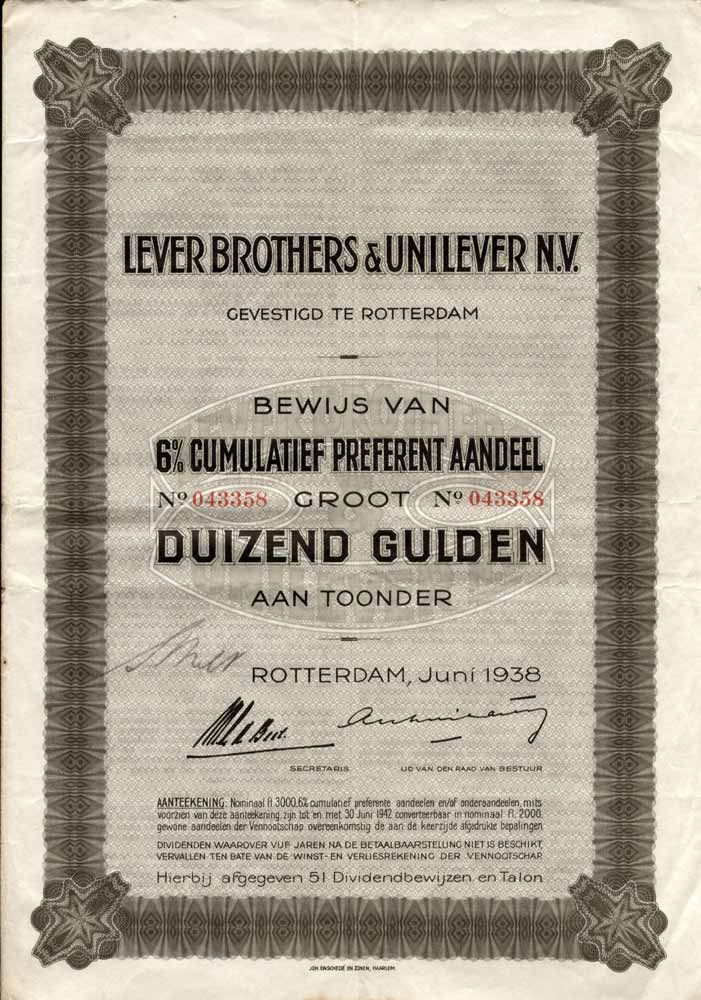
Imagine finding a stack of share certificates in your attic.
A Dutch official publication dated 16 February 2026 contains an entry linked to Unilever. It has a date, an amount and a registration number. But where we might expect to find the beneficiaries, there is a phrase: Onbekende Certificaathouders. Unknown certificate holders.
The published amount is €14,195,452.32. The list covers deposits made in 2021 that remained unpaid when it was published. [1]
From shares to paper.
An administering body, Unilever’s Trust Office, held shares backing bearer depositary receipts. Holders could surrender their certificates for exchange until 26 June 2021.
The remaining shares were sold. The proceeds, less expenses, were deposited with the Dutch Ministry of Finance for their holders. The official register dates the deposit to 16 July 2021. [1] [2]
And this is where paper takes centre stage.
To make a claim, Unilever requires the original certificates.
The company specifies a period of twenty years from that deposit date for holders to submit them and receive their value in cash. [2]
At a time when we can move money from a phone, this story still depends on documents that someone needs to preserve, recognise and present.
What the register does not tell us.
Where are they? Do their holders know what they have? Is someone looking for those very papers?
The sources we consulted leave these questions open. They do not establish how many people or certificates are behind the figure. We do not know whether the documents have been preserved, lost or destroyed.
The amount comes from the February 2026 publication. We have not checked the balance available today. The figure is not attributed to a single beneficiary.
What we can follow is a specific chain: certificates, shares, sale and deposit. At the end of that chain are holders described as unknown.
That is what caught our attention at OMEGA. The money has a precise place in a register. Connecting it to someone entitled to claim it still requires another part of the story.
Would we recognise one of those papers if it turned up in an old folder tomorrow?
How does this register work?
The Dutch Consignatiekas holds deposited money for people entitled to receive it. The official notice identifies the deposit; a claimant still has to establish their entitlement. Here, Unilever also requires the original certificates.
Read our guide to these registers →Read the sources
- Staatscourant 2026, 6555. Published 16 February 2026. Entry 27581, sequence 1: amount, deposit date and unknown certificate holders.
- Unilever: termination of the depositary receipt structure. Section “Trust Office to terminate Unilever NV depositary receipt structure”: exchange, sale, deposit, original certificates and claim period.
- Dutch government: submitting a claim. Official information on establishing entitlement to deposited funds.
Sources consulted on 16 October 2026. This story does not identify a beneficiary or establish entitlement to payment. OMEGA is not affiliated with Unilever.